• Find transmediacapital on Facebook
  • Follow transmediacapital on Twitter
  • Contact Us
  • May 19, 2012

Transmedia Capital

Funding and Mentors for New Media's Brightest Stars

  • Home
  • About Us
    • Market Position
    • Investment Strategy
    • Team
    • Partners
  • Portfolio
    • Current
  • News
  • Blog
    • Articles
    • Featured Video
  • Jobs

Kiip

Going beyond the banner and text ads used by industry leaders iAd and AdMob, the team behind Kiip has thought long and hard about the way people actually play games and has come to conclusion that the moments when players experience in-game achievements like upping a level, completing a challenge or accumulating a certain number of points are the most valuable in terms of providing the most user engagement. Kiip has partnered up with big brands like Sephora, popchips, Homerun.com, Sony Dash, Vitamin Water, 1-800-Flowers, Dr Pepper, GNC, Carl’s Jr and Hardee’s to offer players actual in-game rewards like a voucher for six bags of popchips, a lipstick sample or a complimentary smoothie when they complete gaming milestones.

Mining “Happiness Moments” at Mobile-Rewards Startup Kiip

By Wade Roush Xconomy Follow @wroush
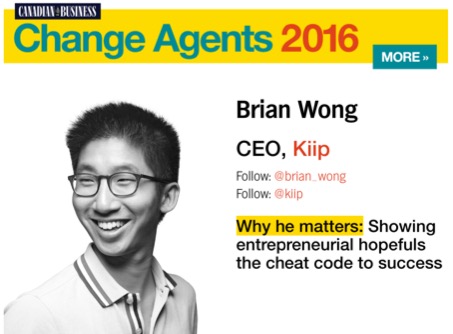
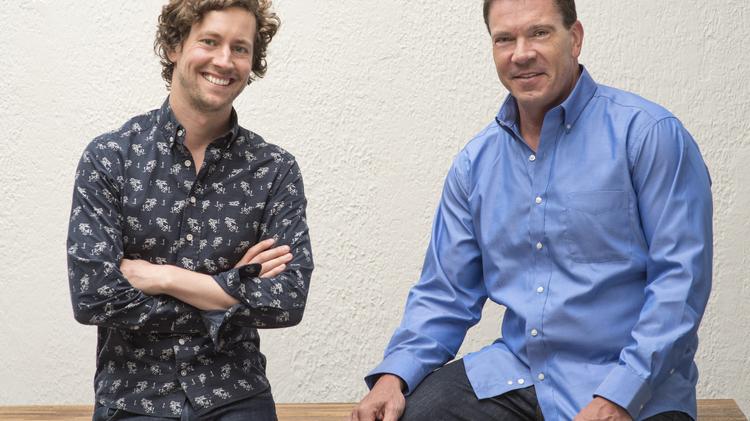
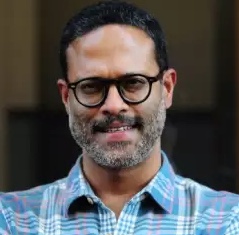
Brian Wong, founder and CEO of Kiip

Whatever you do, don’t tell Kiip CEO Brian Wong that he’s in the advertising business. Yes, if you’re playing a mobile game that uses Kiip’s service, you’ll see pop-up screens offering rewards from big brands like Pepsi, Disney, and Best Buy. But these aren’t ads, Wong insists. They’re moments of reciprocity prompted by an achievement on your part, like shooting the boss zombie. And they might just signal the end of an era for traditional online marketing.

Wong is one of several startup founders striving to blow up the whole traditional banner-advertising model in Web and mobile commerce and replace it with something that’s more effective for brands and more appealing for consumers. That something, for Kiip, is the achievement—the “happiness moment,” in Wong’s terminology. “It’s this amazing moment that every good game in the world has—a natural pause in play when you are happy. Dopamine rushes to your head. You feel like you’ve accomplished something.”

The hypothesis Kiip and other companies are testing is that this dopamine-rush moment is the perfect time to reach out with a brand message—say, an offer of a free burger at Carl’s Jr., or some virtual currency to spend in an online store, or a discount on a game rig. For mobile game developers, showing players these reward offers—and earning a slice of the revenue in the process—is now simply a matter of plugging in some code from a reward network such as Kiip or its competitor Beintoo, an Italian-born company that just relocated to San Francisco. Builders of console or PC games can now tap into a similar rewards system from Raptr, the San Mateo, CA-based community for gamers.

The entrepreneurs at all these companies are convinced that gamers are far more likely to respond to an offer if it comes at a natural pause in a game, in response to an achievement, than they are to interrupt themselves by clicking on a banner ad. Wong says he grasped the seed of the concept on a long plane flight back in 2010, when he noticed how many of his fellow passengers were amusing themselves with smartphone games. “That was the epiphany,” he says. “What if I could harness these moments and do something with them?”

Wong, a 21-year-old business graduate from the University of British Columbia, got his start in Silicon Valley doing business development at Digg, the social news aggregator. After getting swept up in a round of layoffs at Digg, he traveled for a while, had his epiphany, connected with co-founders Courtney Guertin and Amadeus Demarzi, and raised $300,000 in seed capital from Transmedia Capital, True Ventures, and a small group of other investors.

Gamers no longer respond to the banner ads distributed by Google’s  and other ad networks, Wong argues. An ad on the Web is essentially a billboard shrunk down to the size of a PC or laptop screen, he points out; on a smartphone screen it’s smaller still. “You are taking a model from an old platform and trying to jam it into a new one,” he says. “There is no innovation there. We decided to throw that all away and figure out what we would create if we were to invent the entire concept from scratch.”

Using a self-service platform that Kiip introduced two months ago, game developers can download a software kit that allows them to specify which achievements in their games should trigger a reward offer from Kiip. Then, at the appropriate moment—say, between levels, or when a game is over, or when

the player has achieved a new high score—an offer appears in a pop-up window. Kiip’s clients include names like 1-800-Flowers, Best Buy, Disney, Kodak, Pepsi, Sephora, Starbucks, and ticket agency ScoreBig; offers range from a free coffee to a free Xbox 360 game console. To redeem offers, players just enter their e-mail addresses.

Engagement rates are vastly higher for Kiip rewards than for traditional banner ads, Wong says. Some 10 to 13 percent of offers get redeemed, compared to banner-ad click-through rates far below 1 percent. The difference, Wong says, is that the offer is arriving at the right time, when the player feels good about finishing something. “I am not taking a piece of the screen. I am not ruining the experience. I am not changing the user interface or the user experience. I am using a particular moment and reciprocating,” Wong says.

Developers—and more importantly, gamers—seem to be responding to the model. About 300 developers have joined the startup’s network, and the number of monthly active users seeing reward offers doubled every month between November and March. Kiip earns $0.25 to $3.00 per reward redemption, and shares an undisclosed fraction of that revenue with the game developer, according to Wong. Some developers earn “five figures or more on a monthly basis,” he says.

Because it has actual revenue, Kiip has been able to expand to 27 staffers on just $4 million in Series A money (collected in early 2011). “Funding, to so many companies, is like a ticking time bomb,” Wong says. “To us it’s not even close. We started generating revenue from the day we launched.” And it’s building a brand that game developers are going out of their way to promote: some companies actually boast on their iTunes App Store pages that their games are Kiip-enabled. “People won’t say ‘I love AdMob,’ but they will say that they love Kiip,” Wong boasts.

Transmedia Capital general partner Chris Redlitz, a mentor to Wong and one of Kiip’s earliest investors, calls Wong’s idea an “everybody wins” scenario. “For game developers it’s incremental revenue. For game players, it’s an added bonus—beyond the good feeling of achieving something you are getting a reward. And for advertisers, it’s one of the best new opportunities for them to engage with their audience.” Redlitz says it took someone as young as Wong to “understand the demographic” and predict how mobile gamers would respond to new types of brand messages.

If achievement moments are so powerful, could they be exploited outside the realm of mobile games? And if so, is there a concomitant danger of overcommercialization—of bombarding consumers with reward offers until they’re numb?

Wong has thought about both questions. On the one hand, he’s bullish on the idea of the happiness moment. Fitness apps such as MapMyRun are already using Kiip toreward users for logging exercise sessions. And from listening to Wong talk about the company’s larger vision, it sounds like it’s only a matter of time before offers mediated by Kiip pop up in new contexts such as Web or console games or even live sports events. “We want to own every single achievement moment on the planet,” Wong says. “That will be a billion-dollar business.”

But at the same time, Wong says he views the happiness moment as a “natural resource” that has to be “mined responsibly and sustainably.”

“You don’t want to hit the bottom of the well early on,” He says. “That would just be greed.” To make sure game players don’t tire from over-exposure to offers, Kiip limits the frequency of its pop-ups, Wong says, and it employs a tracking system called a preference graph to make sure that it doesn’t show offers to people who don’t want them. “We are very good at policing ourselves,” he says.

Kiip isn’t approaching the saturation point yet, in Wong’s view. In fact, the startup set aside $100,000 in March for a “Build Fund” to encourage independent developers to come up with games that have Kiip-mediated happiness moments built in from the beginning. The startup plans to hand out the money to 20 developers in $5,000 chunks.

If you’re trying to replace traditional advertising with reward-based messages, after all, every little seed helps. “I try to drill it into everyone’s head that the minute you describe something as an ad, there are connotations and the market responds differently,” Wong tells me at the close of our interview. “You can definitely say in your piece that ‘The founder of Kiip seems very obsessed with describing this as a moment and a reward.’”

Brian Wong from Kiip Extends His Message to The Last Mile

Posted: December 11, 2011 in Champions

The men of @thelastmilesq had the opportunity to meet an extraordinary young entrepreneur on Thursday night, Brian Wong. Brian’s story has been well chronicled: graduated four years early from college, the youngest person to ever receive venture funding at 19, highly sought after speaker (presented in 10 different countries). We asked Brian to visit The Last Mile and share some of his experiences of overcoming challenges as a young entrepreneur and how he has built his personal brand in a very short time. Brian was apprehensive when he was initially asked, and questioned whether his message would resonate to an audience of men that have been incarcerated for over 10 years. This has been a common reaction when people are first exposed to the realities of prison life and the perceived lack of awareness and curiosity that exists behind bars.


On December 8th Brian spoke to the men for about an hour and had a very engaged Q&A session at the end of his presentation. Brian was clearly surprised at the level of engagement and the depth of the questions that were asked. The most revealing question came from Kenyatta, asking “…if any of us were free tomorrow, would be you be open to hiring us.” Brian did not hesitate to say that he would be very willing to consider them for a position, no BS. Brian walked away with a new appreciation of what The Last Mile program is trying to accomplish and a new awareness that our prisons have many problems, but they also have many people with passion, presence and perseverance, and they can be successful members of society if given the right direction and a chance to prove themselves.
Learn more: www.thelastmilesq.com

A Welcome from Kiip

Kiip: A Welcome from kiip on Vimeo.

Return to top of page

c 2011 TransmediaCapital LLC